

Industrial Tank & Vessel UHP Cleaning — Storage, Process, Mining, FMCG
Hemera Projects delivers ultra-high-pressure (UHP) and high-pressure (HP) cleaning of industrial tanks and process vessels across South Africa — storage tanks, process vessels, drums, reactors, leach tanks, blow tanks, evaporator bodies, digesters, brewery tanks, food-grade tanks and the full range of containment equipment used by the SA process industry. Tank cleaning sits at the heart of nearly every refurbishment, lining renewal, inspection campaign and shutdown turnaround — the cleaner the surface at handover, the better the next phase performs.
Tank and vessel cleaning is technically distinctive because the failure modes are unforgiving. Inadequate cleaning before lining or coating renewal causes premature coating failure. Confined-space access risks are higher than open-area work. Hot-work permits are mandatory before any subsequent welding or refractory installation. The right combination of UHP technique, confined-space management, hot-work coordination and project documentation is what separates a clean handover from a delayed turnaround.
Tank and vessel cleaning scopes we deliver
- Crude and product storage tanks: API-650 storage tanks holding crude oil, refined product, intermediate, additive and slop streams. Internal cleaning during inspection cycles, lining renewal and major refurbishment.
- Process drums, reactors and vessels: Coker drums, FCC reactors and regenerators, hydrocracker reactors, charge drums, knock-out drums, separators, settlers — UHP cleaning ahead of internal inspection or repair.
- Mining leach tanks and SX/EW tanks: Leach tanks, mixer-settler tanks, electrolyte tanks, organic phase tanks, crud tanks at copper, gold and PGM operations. Cleaning before relining or refurbishment.
- Pulp and paper tanks: Blow tanks, evaporator bodies, digesters, white liquor tanks, black liquor tanks, brown stock tanks at SAPPI and Mondi mills.
- Brewery and food-grade tanks: Mash tuns, kettles, fermentation vessels, BBT, syrup tanks, mixing tanks, food-grade process vessels.
- Effluent and process water tanks: Effluent treatment tanks, balance tanks, process water tanks across SA industrial operations.
- Acid plant equipment: Sulphuric acid storage tanks, contact tower internals, absorber tower internals — cleaning before lining renewal at mining, fertiliser and chemical operators.
- Pressure vessels: ASME or PED-coded pressure vessels requiring internal cleaning ahead of inspection — typically heat exchangers, separators, surge drums.
UHP techniques for tank and vessel work
- Static-jet UHP cleaning — Manual UHP lance work with operator-positioned cleaning, used on smaller vessels and where the tank geometry doesn’t suit rotating systems.
- Rotating-head UHP cleaning — Engine-driven rotating cleaning heads suspended inside the tank, providing uniform coverage of internal surfaces. Faster than manual work for medium-to-large tanks.
- Robotic and remote-operated cleaning — Where operator entry into the tank is undesirable (gas, residue, geometry) — remote-operated cleaning systems perform the scope without confined-space entry.
- Selective cleaning for lining preparation — UHP cleaning to coating-spec standards (SSPC-SP WJ-2 / NACE No.5/SSPC-SP12) where surface preparation must be precise.
- Hard scale and deposit removal — UHP for hard scale (calcium carbonate, sulphate scale, copper deposits, iron oxide) where chemical cleaning is impractical or creates disposal liability.
- Soft-deposit cleaning — HP for general cleaning of soft deposits, biofilm, organic carryover, sludge and process residue.
- Sediment removal — Vacuum-assisted UHP cleaning for tank floor sediment, hydrocarbon sludge, leach circuit crud and tailings tank sediment.
Where UHP tank cleaning sits in the bigger picture
Tank cleaning is rarely a stand-alone scope. The output of UHP tank cleaning is most often the input to a subsequent scope — internal lining renewal, coating recoat, internal inspection (NDT, MFL, UT), refractory replacement, vessel modification or NDE. Hemera’s project supervisors plan the cleaning scope to deliver a surface ready for the next trade, signed off against the inspection or coating-spec standard, with the documented record needed for the next phase.


VIDEO GALLEY
HSE on tank and vessel cleaning
Tank and vessel cleaning is among the higher-risk industrial scopes. Confined-space entry brings gas testing, breathing apparatus, lifeline and rescue plans; residual product or chemistry in tanks brings hot-work coordination and decontamination procedures; high-pressure water in confined spaces requires controlled exclusion and operator certification. Hemera’s documented HSE systems address all of these, our supervisors enforce method statements and JSAs on every shift, and our crews carry the certifications operators expect.
UHP-specific HSE in a tank or vessel means certified equipment, trained operators, controlled exclusion zones, proper PPE for high-pressure water work, and full confined-space entry protocols. Hot work coordination with subsequent welding or grinding scopes is planned in advance.
Documented surface handover
For tank cleaning followed by lining or coating, surface acceptance criteria are documented and signed before the next trade starts. UHP cleaning to SSPC-SP WJ-2 / NACE No.5/SSPC-SP12 standards is verified with documented surface inspection. The next trade gets a clean surface and a project record, not a verbal sign-off and an argument about whether it was clean enough.
Related Hemera services around tank cleaning
- Heat exchanger tube bundle cleaning — for heat exchanger work alongside tank scopes.
- Acid-resistant lining for sulphuric acid plants — lining renewal after cleaning at acid plants.
- Industrial lining and coating for petrochem and refineries — internal lining application after cleaning.
- Pipeline lining for mining slurry — pipework alongside tank scopes.
- Scaffolding for petrochem turnarounds — internal birdcage scaffolds for tank work.
Tank and vessel cleaning enquiries — use the form below. Include the operator, the tank or vessel ID, the service (crude, leach, electrolyte, food-grade, etc.), the deposit description, the next-phase scope (lining, coating, inspection) and any spec documents. Our team responds inside 24 working hours; shutdown enquiries are escalated immediately.

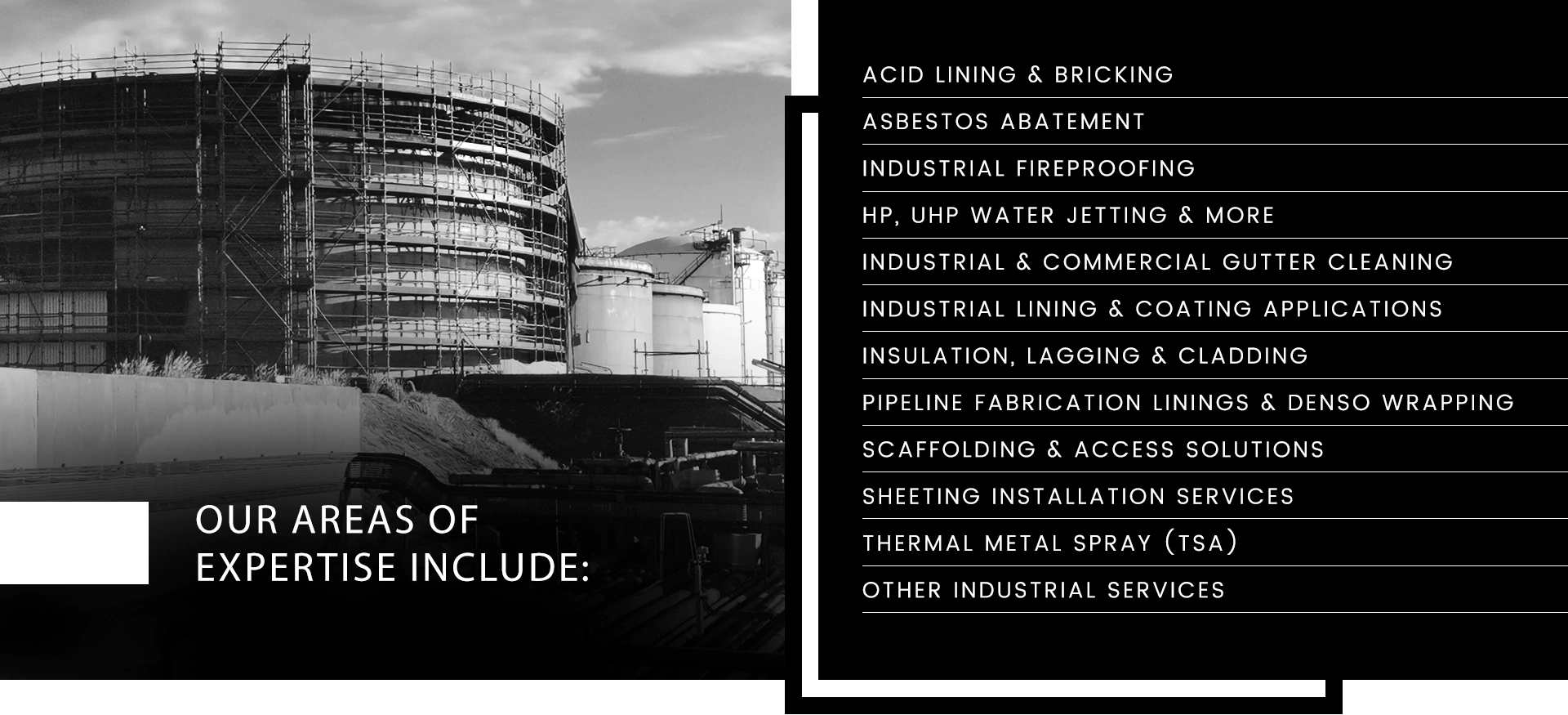

Our team of highly skilled, professional and experienced staff, offer new and existing clients with an unparalleled level of expertise, knowledge and service.