

HP & UHP Water Jetting for Petrochem & Refineries — Sasol, Engen, Natref
Hemera Projects delivers high-pressure (HP) and ultra-high-pressure (UHP) water jetting and industrial cleaning across South Africa’s petrochemical and refinery sector — Sasol Secunda and Sasolburg, Engen’s Durban refinery (Enref), Natref at Sasolburg, Astron at Saldanha, Total/TotalEnergies, Shell and the broader downstream petrochem industry. Our crews work the planned shutdowns and emergency response calls that keep heat exchangers, fired heaters, towers, drums and reactors back in service on time.
Petrochem and refinery cleaning is technically demanding and unforgiving on schedule. Heat exchanger tube bundles foul with coke, asphaltenes, salts and process residues; fired-heater tubes accumulate hard scale; tower internals carry deposit build-up that affects fractionation efficiency; drums and reactors hold legacy contamination that must be cleared before inspection. Each deposit type needs the right pressure, the right nozzle, and the right tooling. Hemera’s UHP fleet, automated tube tooling, and trained crew are built for this work.
Where UHP cleaning fits in a refinery or petrochem plant
- Heat exchanger and tube bundle cleaning: Crude/atmospheric heat exchangers, vacuum heat exchangers, FCC and hydrocracker heat exchangers, condensers, reboilers — all foul aggressively. UHP automated tube cleaning restores design heat transfer, with quantifiable Delta-T improvement post-clean.
- Fired-heater tube cleaning: Crude furnace, coker furnace, hydrotreater and reformer furnace tubes carrying hard external scale and internal coke. UHP cleaning to coating-spec on the fire side; hydroblast on the process side.
- Tower and column internals: Crude tower trays, FCC main fractionator internals, vacuum tower packing — periodic cleaning during turnarounds.
- Drum, reactor and vessel cleaning: Coker drums, reactor vessels, charge drums, knock-out drums, separators, settlers — UHP cleaning ahead of internal inspection or repair.
- Hydrodemolition of failed refractory: Furnace refractory, fluid catalytic cracker (FCC) refractory and reformer refractory removal where chemical attack or thermal cycling has destroyed the lining.
- Surface preparation for coating renewal: UHP back to bright metal where tank, vessel or pipework coating renewal is required, including SSPC-SP WJ-2 / NACE No.5/SSPC-SP12 specifications.
- Pipework cleaning: Crude pipework, product pipework, off-gas pipework, fuel oil pipework — internal cleaning before inspection, repair or refurbishment.
Operations and refineries we serve
Hemera mobilises across South Africa’s downstream petrochem industry:
- Sasol Secunda — coal-to-liquids and gas-to-liquids operations, methane reformers, FT reactors, syngas treatment.
- Sasol Sasolburg — fuels, chemicals and natural gas operations.
- Natref (Sasolburg) — crude refining operations.
- Engen Durban Refinery (Enref) — coastal refining, marine product blending and distribution.
- Astron Energy (Saldanha) — coastal refining and bulk petroleum logistics.
- Total/TotalEnergies, Shell, BP and other downstream operators — distribution terminals, blending plants and marine product handling.
- Independent power producers and gas-to-power facilities — heat exchangers, fired equipment and ancillary cleaning.
HP vs UHP — picking the right approach in a petrochem environment
HP cleaning is the right tool for general plant cleanup, soft deposits, structural cleaning before coating, and pre-shutdown plant prep. UHP is the call when deposits are hard or bonded (heat exchanger fouling, fired-heater tubes, tower internals), when surface preparation must meet coating-spec standards, when chemical cleaning is impractical, or when disposal liability from chemical cleaning is a constraint. Hemera’s supervisors specify HP or UHP per scope, with the right combination of pressure, nozzle, automated tooling and crew positioning to keep the cleaning window short and the result on spec.


VIDEO GALLEY
HSE inside Sasol, Engen and Natref turnarounds
The major SA petrochem operators run their HSE programmes to top-tier international standards. Method statements, JSAs, lock-out/tag-out, permit-to-work, confined-space entry plans, and contractor onboarding are all rigorously enforced. Hemera’s documented HSE systems are built for this environment, and our supervisors are familiar with the permit-to-work systems used at Sasol, Engen, Natref and the smaller refineries.
UHP-specific HSE in a refinery means certified equipment with pressure test records, trained operators, controlled exclusion zones, and proper PPE for high-pressure water work. Confined-space cleaning inside vessels, towers and drums brings additional permits, gas testing, and rescue plans — all of which we plan for as standard, not as add-ons. Our operators carry SAVRALA-equivalent UHP qualifications and our equipment is inspected and recorded according to operator requirements.
Turnaround timing — protecting the start-up date
Petrochem turnarounds are planned to the hour, often 18-24 months in advance. The cleaning scope sits in a tight window between mechanical isolation and mechanical reassembly, and any overrun pushes back the start-up of the unit — which has a direct cost in lost production. Hemera’s project supervisors plan the cleaning scope inside the broader turnaround plan, sequence crews and equipment to remove bottlenecks, and protect the cleaning window so the unit restarts on schedule.
Related Hemera services on petrochem and refinery sites
- Heat exchanger tube bundle cleaning — automated UHP for crude, vacuum and FCC heat exchangers.
- Tank and vessel cleaning — for storage tanks, drums and reactors.
- Industrial lining and coating for petrochem and refineries — applied straight after UHP surface preparation.
- Insulation, lagging and cladding — for steam systems, heat exchangers and process pipework.
- Industrial fireproofing for petrochem and fuel storage — structural fire protection for refinery steelwork.
- Scaffolding for petrochem turnarounds — engineered access for shutdown work.
Petrochem and refinery enquiries
Use the form below to start an enquiry. Include the operator, the unit, the scope (heat exchangers, tower internals, drums, fired heaters, etc.), the turnaround window, and any spec or HSE plan documents. Our team responds inside 24 working hours; turnaround enquiries are escalated immediately.

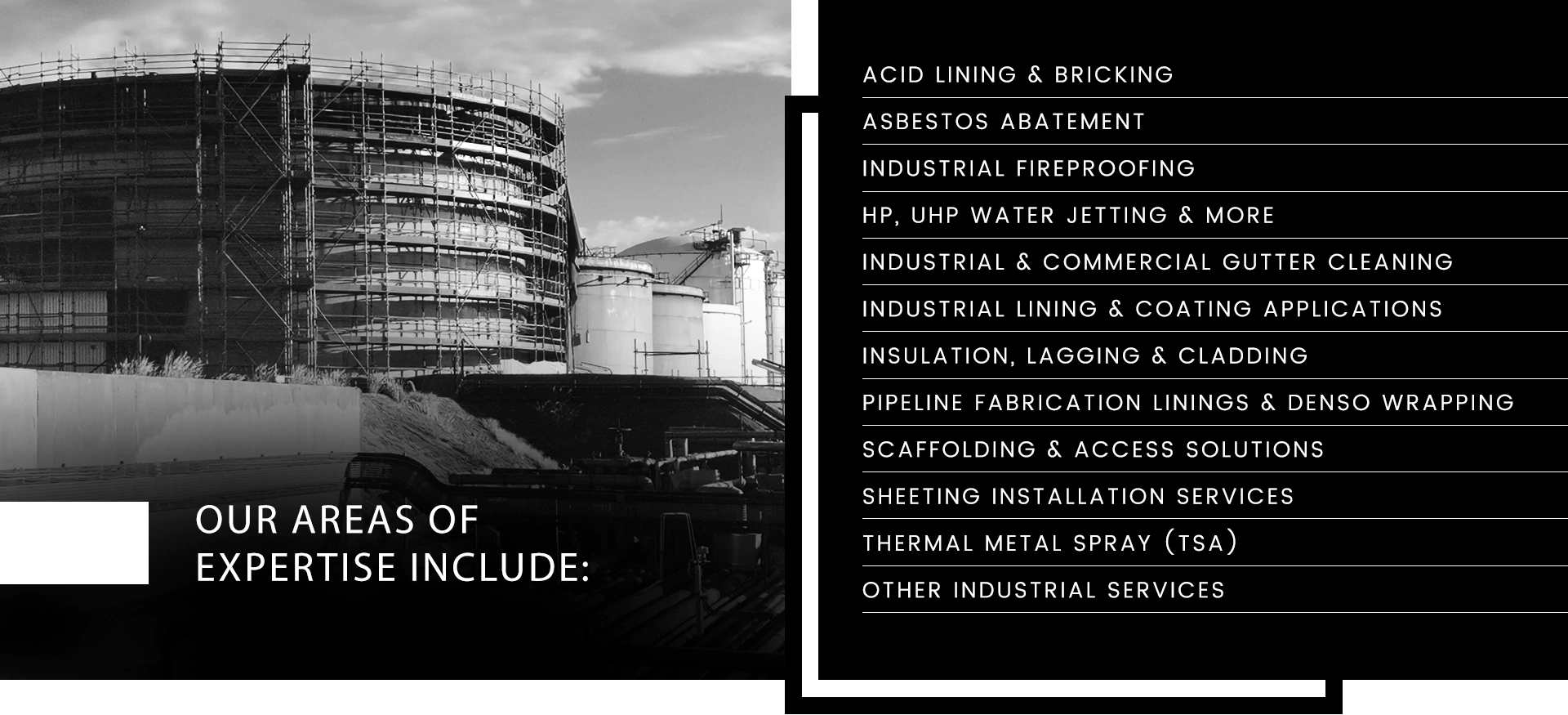


Our team of highly skilled, professional and experienced staff, offer new and existing clients with an unparalleled level of expertise, knowledge and service.